What is solar ev charger integration?
If you already have rooftop solar, charging your EV from it is close to free driving. Solar EV charger integration links a compatible smart charger to your solar system so the car preferentially charges on the energy your panels are generating, instead of exporting that energy to the grid for a few cents and then buying power back later at a much higher rate. Done properly, a solar-matched charger can shift the bulk of your driving energy onto self-consumed solar — the single best return an EV owner with panels can get.
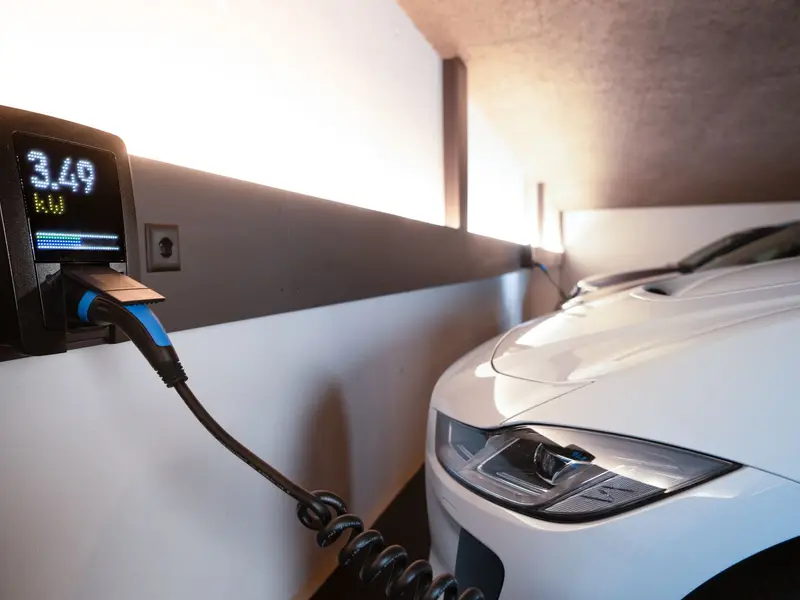
The mechanism is solar matching, sometimes called eco or green charging mode. A CT clamp or energy meter installed at your main switchboard continuously measures what your home is importing or exporting. When the panels are producing more than the house is using, the charger diverts that surplus into the car and modulates the charge rate up and down as production changes through the day. You can typically choose a strict 'solar only' mode (charge solely from excess) or a blended mode that tops up from the grid to guarantee a minimum charge rate when the sun isn't enough.
We work with your existing solar setup — single inverter, multiple inverters, or solar paired with a home battery — and configure priorities sensibly. With a battery in the mix we set the logic so the system behaves the way you want (for example, prioritising the home battery before the car, or the reverse), avoiding the common trap of the EV draining the battery you paid to fill. Where you have three-phase supply, solar matching can capture more surplus at once because the charger can pull a higher rate when production peaks, which suits larger systems and households doing big daily kilometres.
Not every charger does solar matching well, and the metering has to be installed and commissioned correctly or 'solar mode' simply doesn't behave. As an EV charging specialist since 2017, we know which units — Wallbox Pulsar Plus, Ocular IQ, EVSE Australia and others — implement excess-solar diversion reliably, and we install the CT clamps and configure them against your specific inverter so it works on day one. If your switchboard needs modification to add the charger or metering, we coordinate that through our trusted Level 2 ASP partner and manage it for you, so you get one coordinated solar-charging result.
Who it is for
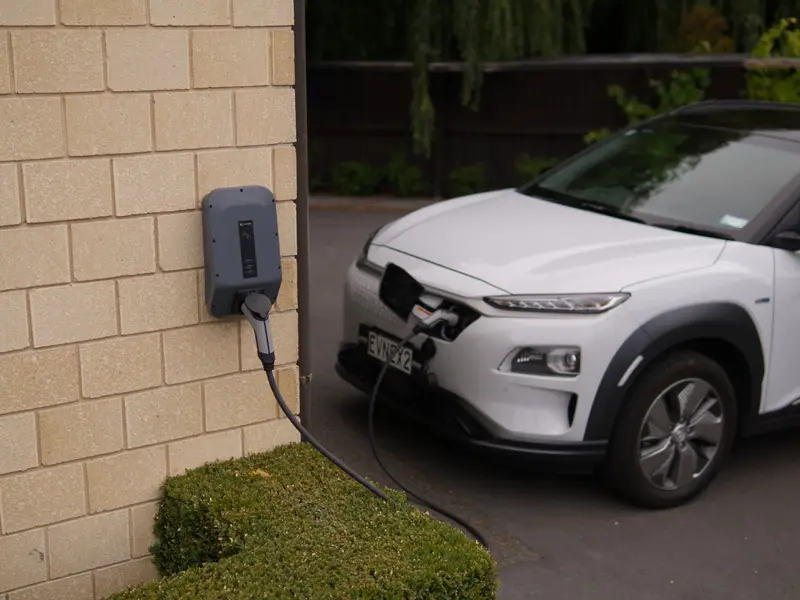
If you have bought (or are about to buy) an electric vehicle and want to charge it properly at home, solar ev charger integration is the upgrade that matters. A hard-wired Level 2 charger is far faster and safer than trickle-charging from a standard power point, and we match the charger to your car, your parking and your switchboard.
Every install is carried out by licensed electricians and completed to AS/NZS 3000 wiring standards. You can read more about electrical licensing in NSW via NSW Fair Trading.
Charger options for solar ev charger integration
We are brand-independent and install the unit that suits you best. Typical fits for this service include Wallbox Pulsar Plus, Ocular IQ, EVSE Australia, Tesla Wall Connector and KEBA. Not sure what you need? Our EV charger types guide explains 7.4kW, 11kW and 22kW AC chargers, DC fast charging, and smart vs basic units, and our charger brands page compares Tesla, Wallbox, EVSE Australia and more.
The installation process
- Solar system review. We assess your inverter(s), any battery, export limits and switchboard so we can spec metering and a charger that supports excess-solar diversion.
- Charger & meter spec. We select a charger proven for solar matching and the correct CT clamp or energy meter for your install.
- Install & metering. We mount the charger on a dedicated circuit and install the CT clamp/meter at the main switchboard to measure import and export.
- Configure solar modes. We set up solar-only and blended modes, battery priority logic, and minimum charge thresholds against your specific system.
- Verify & certify. We confirm the charger tracks real export under load, hand over the app settings, and certify the work to AS/NZS 3000.
Electrical requirements
Solar integration requires a smart charger that supports excess-solar diversion plus a CT clamp or energy meter installed at the main switchboard to read import/export in real time. We confirm supply phase (three-phase captures more surplus at peak), inverter and battery configuration, switchboard capacity and a free circuit way. The charger runs on its own RCBO-protected circuit, and all work — including the metering wiring — is tested and certified to AS/NZS 3000.
Switchboard upgrades. If your property needs a switchboard upgrade before installation, we work with trusted, fully licensed Level 2 ASP electricians to coordinate this seamlessly — we manage the process so you don’t have to deal with a separate trade.
Key benefits
- Fuel your car from self-consumed solar instead of exporting cheap and re-buying expensive.
- Excess-solar diversion automatically modulates the charge rate to track panel output.
- Choose strict solar-only or blended top-up modes to suit your routine.
- Sensible priority logic when a home battery is in the mix so the car does not drain it.
- Correctly installed CT clamp/metering so solar mode actually works from day one.
What does it cost?
Indicative: solar-integrated charger installs in Sydney commonly run $1,600–$2,800 supplied and installed, with the premium covering a solar-capable smart charger and the CT clamp/energy metering at the switchboard. Multi-inverter or battery-coupled sites and three-phase add cost. Switchboard upgrades are quoted separately via our Level 2 ASP partner.
Related EV charging services